Beyond the Blank Page: How Researchers Can Use AI to Fast-Track Impactful Science Communication
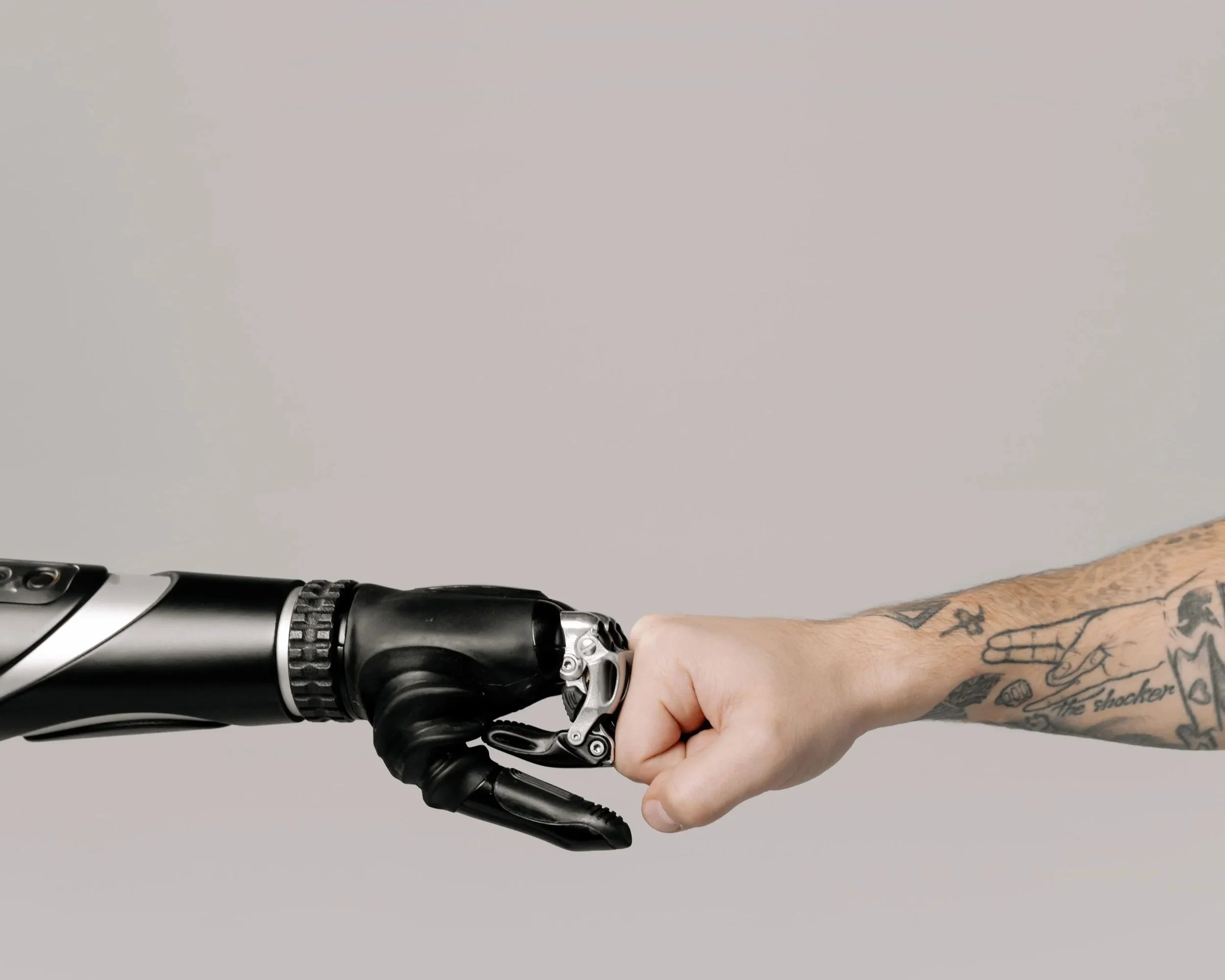
Close up image of fist bump between a robotic hand and a human hand.
I help mid-career researchers develop sustainable, impactful research programs designed for the next phase of their careers. Click here to find out more.
Communicating your research requires knowing your audience, but starting from scratch is time-consuming. AI tools can be your "first draft partner", rather than a final writer, and help you rapidly translate evidence into tailored, high-impact messaging without sacrificing human judgment or domain expertise.
The last month of posts has been a lot of high-level planning and thinking. And while this work is important, it also feels slow because we can’t see the outcomes right away. This week we’re going to discuss something that will let you see results faster. We’re circling back to a favorite topic of mine: how the heck do we get stakeholders outside of the academy to pay attention to our research findings?
Now I hear some of you out there thinking, "I’m not a science communicator.” But yes, you are. Or “I’ve published, and that’s enough for me to keep my job”. For now, that might be true, but it’s changing as our funding landscape evolves and the public demands more.
Translating Evidence in a Crowded Landscape
Health services researchers face an increasingly tough environment as skepticism of expertise grows and the need for evidence-based research is more important than ever. Mid-career faculty must share their work even more because they have built a substantial body of data since the start of their careers that could and should be making an impact today.
Moving your findings out of academic journals and into decision-makers' hands requires tailored communication. Without a targeted, plain-language translation, critical evidence gets lost, limiting real-world policy impact and community engagement. AI tools can help give you a faster, more concrete starting point: a realistic picture of who you're talking to and a first draft you can react to and refine.
An AI-Assisted Translation Framework
Reframing AI tools as thought partners, rather than making them responsible for executing the entire task. This requires a shift away from much of the rhetoric we’ve been given about AI's utility. With structured prompts, you can offload initial drafting and check your blind spots, while keeping full strategic control.
1. Build a Granular Audience Profile
But before drafting a single word of the message about your research, leverage AI to map out the mental model of your target decision-maker. Who is your audience or audiences? Are you targeting policymakers, clinicians, patients, community members, caregivers, or someone else?
Once you’ve decided on your audience(s), feed the AI specific information about each audience's role, influence, professional context, core values, and recent actions (do this for each audience separately). The more detail you provide, the more helpful your AI audience profile will be in drafting your message. As your AI provides outputs, push back. Ask for and check the authenticity of real-world examples, shorten and simplify language, and correct the tone until the message sounds like a real person (ideally you). As a final step, check your profile against an actual person or people representing your audience. While these AI tools are great, if we want real people to engage with our message, we need real people to vet them for us.
Once these tasks are complete, catalog each audience profile so you can use it later.
2. Draft and Polish Tailored Messages
Once you trust an audience profile, combine it with your research findings to build a punchy message.
| Phase | Core Task | AI Prompt Goal |
|---|---|---|
| Phase 1: Structure | Generate 60–90 second pitch | Lead with the main conclusion, cite a concrete example, and close with a clear ask. |
| Phase 2: Plain Language | Strip academic jargon | Prompt: "Use shorter sentences, plainer words, and a human voice." |
| Phase 3: Human Review | Mitigate AI risks | Verify every fact, edit out stereotypes, and check against your original study. |
3. Practical Takeaways for Researchers
Bring the Expertise, Borrow the Speed: Use AI to build an initial audience profile and elevator-pitch draft, but rely on your domain knowledge to drive the narrative.
Rigorously Fact-Check Outputs: Treat all initial AI text as an unverified rough draft—actively check for hallucinations, made-up statistics, or reductive bias before sharing.
Protect Confidential Data: Never paste unpublished findings, embargoed datasets, or sensitive participant information into external AI tools.
What’s the first audience profile you’re going to create? I think mine will be people who have diabetes and need to improve their self-management of the condition.
(Words: 714)
Not sure what you need? Complete this 3-minute survey to see if I can help.